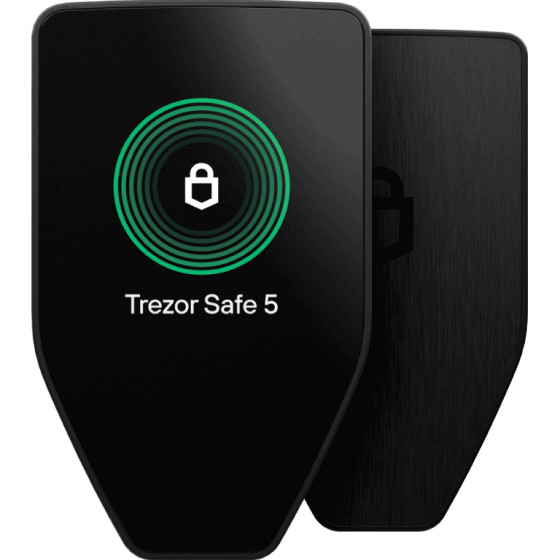
🔒 Keep your crypto safe — secure it with a Trezor hardware wallet.
💡 Already mining Grass? If not, join here.
**Focus keyword chosen:** *Grass staking rewards*
Grass staking rewards have officially graduated from theoretical tokenomics to cold, hard USDC in my wallet — and that shift changes everything about how I think about this network. I’ve been running a Grass node since the early days, watching the points accumulate and quietly trusting the process. Sitting here in September 2026, that patience is starting to look like a solid call.
GRASS is currently trading around $0.35
, a far cry from its glory days but in my eyes that’s a feature, not a bug — it means there’s still serious upside to capture if you’re doing more than just watching the charts.
The all-time high of $3.89 was reached back in November 2024
, and for anyone paying attention to what’s been built since then, the fundamentals are meaningfully stronger now than they were at that peak.
The biggest development this year has been the formalisation of real revenue sharing.
A governance vote passed on July 7, 2026 to distribute a share of the network’s USDC revenue to GRASS stakers, with the network reporting $33 million in annualized revenue from selling bandwidth and AI training data.
That’s not a roadmap promise — that’s money flowing back to participants.
Eligible users were able to claim Stage 2 rewards beginning July 22, 2026, with those rewards paid out in USDC rather than GRASS tokens.
Getting stablecoins instead of more tokens is a mature move, and honestly the kind of thing that separates sustainable DePIN projects from vaporware.
Ready to start earning?
On the points side, things have gotten more nuanced — which I appreciate even though it adds a layer of complexity.
Grass Points are now divided into two categories: Uptime Points and Network Points.
Network Points pull from a fixed daily pool of one million, split pro-rata by real usage — and the model shift is important because passive idling no longer cuts it the way it once did.
You need your node genuinely routing traffic to earn meaningful Grass staking rewards, not just leaving a browser tab open.
Android users get an extra edge right now, with a 3x Grass Points multiplier available if you’re running the app on a mobile data connection with a different IP from your home Wi-Fi.
Season 2 is confirmed and actively being positioned around long-term contributors.
On-chain data shows that 86.6% of Season 1 claimers have not staked — and while staking isn’t definitively confirmed to be weighted in Season 2 scoring, the team’s repeated emphasis on rewarding long-term contributions makes skipping it hard to justify.
I’ve had my tokens staked through the dashboard for months and I’m keeping them there.
There are real risks worth naming.
A major investor token unlock covering roughly 25% of supply concludes in late October 2026, which poses a genuine overhang if holders decide to sell.
Price is also highly sensitive to volatile AI and DePIN sector trends and broader crypto market sentiment.
None of that is hidden — it’s just the reality of early-stage infrastructure tokens.
What keeps me running the node is the underlying thesis:
Grass is a decentralized data layer that lets users contribute unused internet bandwidth to power AI model training and data scraping — and this model addresses a critical bottleneck in the AI industry around the need for large-scale, ethically sourced, user-consented data.
That problem isn’t going away.
Coinbase added GRASS to its public asset listing roadmap, indicating the token is under active review for potential trading support on the U.S. exchange.
The narrative, the revenue, and the exchange momentum are all pointing in the same direction. My node stays on.
Mining Grass? If you’re not staking yet, get started with our referral link:
🔒 Keep your crypto safe — secure it with a Trezor hardware wallet.