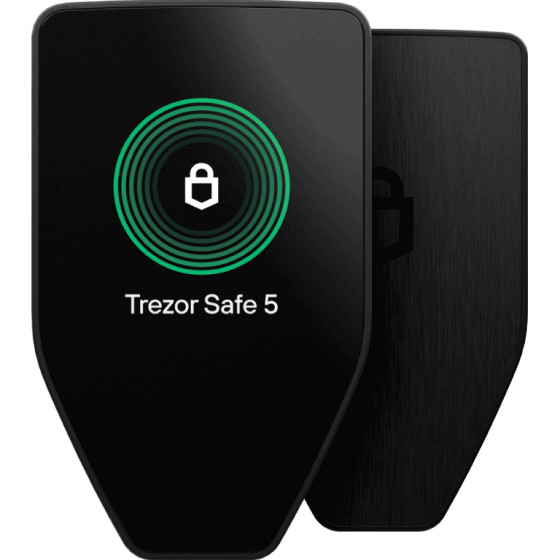
🔒 Keep your crypto safe — secure it with a Trezor hardware wallet.
💡 Already mining Grass? If not, join here.
Grass staking rewards are no longer just a promise on a roadmap — they’re a live, governance-backed mechanism that’s changing the way I think about this project. I’ve had the Grass node running in the background of my laptop since Season 1, quietly letting my idle internet bandwidth do the work, and right now feels like one of the most interesting moments the network has seen.
Grass is a decentralized data layer protocol that enables users to contribute their unused internet bandwidth to power AI model training and data scraping.
The core pitch hasn’t changed, but the economics around it have matured significantly.
A passed governance vote will share network USDC revenue with stakers, potentially creating sustainable demand if the $33M annualized revenue grows.
That’s the kind of fundamental shift that turns a speculative points grind into something with genuine yield attached to it.
On the points side, the system has been refined.
Grass Points now break down into two types: Uptime Points and Network Points, which give a clearer picture of both the availability and usage of the bandwidth that you contribute.
Network Points swing day to day based on actual demand routed through your node — some days are solid, others are close to zero. Don’t read too much into the daily variance.
I’ve learned that patience is the real strategy here.
The dual reward system rewards you for staying connected and contributing usable bandwidth, while staking lets you lock tokens to maximize rewards and help secure the network.
There is no minimum staking period, and rewards are accrued and distributed every second
— a detail I genuinely appreciate for the flexibility it provides.
Ready to start earning?
In terms of price, GRASS is trading in a subdued range right now.
The current price sits around $0.36, down significantly from its all-time high of $3.89 reached in November 2024.
That drawdown stings if you’re purely price-focused, but for someone accumulating points and staking, lower prices mean more tokens staked per dollar.
While many infrastructure tokens in the $100–200 million range show declining network activity, Grass’s decentralized bandwidth-sharing network has been steadily expanding its node operator base throughout 2026.
That real-world usage growth is what keeps me plugged in.
There are legitimate risks worth naming.
A major investor token unlock — roughly 25% of supply — concludes in late October 2026, posing a significant overhang if holders sell.
It’s the single biggest near-term headwind, and anyone paying attention should be watching on-chain flows around that window. On the upside,
the claim window for Stage 2 rewards, distributed in USDC for bandwidth contributed between October 2024 and June 2026, opened on July 22, 2026, and users have until January 22, 2027 to claim their allocated USDC.
That’s a meaningful payout for consistent contributors — not just token emissions, but actual stablecoin revenue.
GRASS operates at the intersection of DePIN and AI, two of crypto’s hottest but most volatile narratives.
For me, that intersection is exactly why grass staking rewards are worth stacking right now rather than waiting on the sidelines. The network is generating real revenue, distributing it to stakers, and Season 2 is still building.
Grass currently offers a 3x Grass Points multiplier for Android users — if you have an Android phone on a mobile data connection with a different IP from your home Wi-Fi, this stacks on top of desktop uptime.
Little optimizations like that add up over time.
The token price will sort itself out. The bandwidth, the uptime, and the grass staking rewards you accumulate in the meantime? Those are yours regardless.
Mining Grass? If you’re not staking yet, get started with our referral link:
🔒 Keep your crypto safe — secure it with a Trezor hardware wallet.